[caption id="attachment_12677" align="aligncenter" width="618"]  Concept art from Star Citizen, a space-combat game funded by Kickstarter.[/caption] When aspiring video game developer Germain Couët graduated from a game design studies program in 2010, most of his fellow students went off to get jobs with big studios. But Couët followed a different path: he co-created his own studio and started building a real-time strategy game called Castle Story. To fund development, Couët and team went on Kickstarter, the crowdfunding site, and asked gamers to give at least $15 for early access to the game. The goal was to raise $80,000 in a 30-day period ending Aug. 26, 2012. They got $702,516. Almost simultaneously, a famous game developer named Chris Roberts founded Cloud Imperium Games in Los Angeles. With decades in the business and a track record of success, Roberts could have gotten all the funding he needed from investment firms. Instead, Roberts did the same thing as Couët: he went on Kickstarter. Seeking money on both Kickstarter and his own site, Roberts has now raised nearly $20 million (a record) toward the funding of Star Citizen, a space trading and combat simulation game. Their stories, and literally thousands of others like them, illustrate the vast impact Kickstarter and other crowdfunding sites have on how video game development gets paid for. Hitting a Kickstarter goal is by no means easy; nor is completing the months or years of development needed to deliver a finished game. But just as the Internet fundamentally altered the way games are distributed from publishers to players, crowdfunding has upended the traditional models of raising money for development. Besides letting players choose which games get made in the first place, crowdfunding brings gamers and developers closer together, letting players offer input throughout the development process. In a typical Kickstarter, a project gets 30 days to hit a funding goal. Pledges aren’t deducted from contributors’ accounts unless the goal is reached. According to Kickstarter statistics, 2,265 games have been successfully funded, while 4,194 game projects fell short of their funding goal. (That includes tabletop games in addition to video games.) 598 funded games raised at least $20,000, and 196 raised at least $100,000. Some 25 games raised at least $1 million each, giving games more million-dollar campaigns than all other categories combined. There have been some unfortunate outcomes, with games not being made due to technical errors or developers just getting in over their heads. But it would be difficult to argue that Kickstarter, and similar sites like Indiegogo, haven’t had a positive impact on the industry.
 Castle Story.[/caption] “We worked on the game for about a year without any money, almost nothing. We had no funding options because we were newbies, we had no previous experience,” Couët said. Kickstarter was a “no-brainer,” he added, offering potentially high rewards with little risk. But Sauropod didn’t go to Kickstarter immediately. Throwing a half-baked idea on to the site without putting legwork in first is no path to success. Couët and team did their best to create a prototype and, crucially, a video to show it off. That 10-minute video, released in January 2012, went viral and earned nearly a million views. Their Kickstarter went live in July 2012 and raised nearly nine times as much as the team sought. Couët says he got a bit lucky, “surfing the Minecraft wave.” But, “what I know we did right is we released a video with something that worked. I think if you want to make a Kickstarter that has success you need either a reputation, or you need to show people something that works. That’s why we worked on the game for about a year before talking to anyone about it.” With Kickstarter money in hand, Sauropod hired a few employees, upgraded its technology (moving from the free version of the Unity game engine to the professional version), and kept on working. It’s paid off, as an early-access version of Castle Storywas released on Steam this week. “It’s still early access so the game is really buggy and lacking a lot of features,” Couët said. The goal is to get “as much comments and feedback as possible” to help hone the finished product. [caption id="attachment_12679" align="aligncenter" width="618"]
 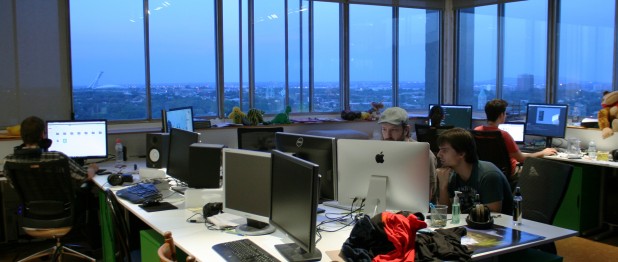 At work in Montreal's Sauropod Studio.[/caption]
Concept art from Star Citizen, a space-combat game funded by Kickstarter.[/caption] When aspiring video game developer Germain Couët graduated from a game design studies program in 2010, most of his fellow students went off to get jobs with big studios. But Couët followed a different path: he co-created his own studio and started building a real-time strategy game called Castle Story. To fund development, Couët and team went on Kickstarter, the crowdfunding site, and asked gamers to give at least $15 for early access to the game. The goal was to raise $80,000 in a 30-day period ending Aug. 26, 2012. They got $702,516. Almost simultaneously, a famous game developer named Chris Roberts founded Cloud Imperium Games in Los Angeles. With decades in the business and a track record of success, Roberts could have gotten all the funding he needed from investment firms. Instead, Roberts did the same thing as Couët: he went on Kickstarter. Seeking money on both Kickstarter and his own site, Roberts has now raised nearly $20 million (a record) toward the funding of Star Citizen, a space trading and combat simulation game. Their stories, and literally thousands of others like them, illustrate the vast impact Kickstarter and other crowdfunding sites have on how video game development gets paid for. Hitting a Kickstarter goal is by no means easy; nor is completing the months or years of development needed to deliver a finished game. But just as the Internet fundamentally altered the way games are distributed from publishers to players, crowdfunding has upended the traditional models of raising money for development. Besides letting players choose which games get made in the first place, crowdfunding brings gamers and developers closer together, letting players offer input throughout the development process. In a typical Kickstarter, a project gets 30 days to hit a funding goal. Pledges aren’t deducted from contributors’ accounts unless the goal is reached. According to Kickstarter statistics, 2,265 games have been successfully funded, while 4,194 game projects fell short of their funding goal. (That includes tabletop games in addition to video games.) 598 funded games raised at least $20,000, and 196 raised at least $100,000. Some 25 games raised at least $1 million each, giving games more million-dollar campaigns than all other categories combined. There have been some unfortunate outcomes, with games not being made due to technical errors or developers just getting in over their heads. But it would be difficult to argue that Kickstarter, and similar sites like Indiegogo, haven’t had a positive impact on the industry.
Summary
No Money? No Problem
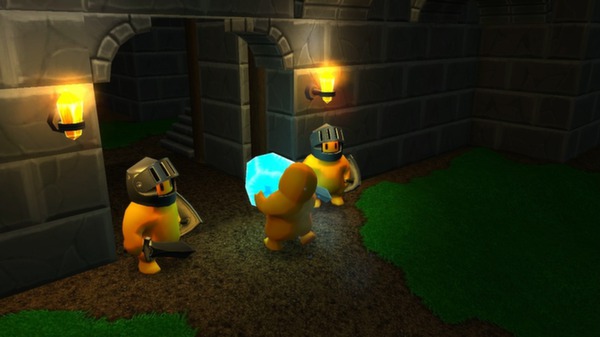
When Couët and François Alain co-founded Sauropod Studio in Montreal, “We didn't really have many options,” Couët told Slashdot. “Me and my co-founder had just recently graduated from game design studies. We had a choice to go work in the industry or to start a project on our own. Then we decided we didn't have anything to lose, so we decided to go for it.” They had little money, but they had an idea. Castle Story for Windows and OS X would let players build castles brick by brick, and defend them against enemies, combining elements of Minecraft and traditional tower defense games. [caption id="attachment_12678" align="aligncenter" width="600"] Castle Story.[/caption] “We worked on the game for about a year without any money, almost nothing. We had no funding options because we were newbies, we had no previous experience,” Couët said. Kickstarter was a “no-brainer,” he added, offering potentially high rewards with little risk. But Sauropod didn’t go to Kickstarter immediately. Throwing a half-baked idea on to the site without putting legwork in first is no path to success. Couët and team did their best to create a prototype and, crucially, a video to show it off. That 10-minute video, released in January 2012, went viral and earned nearly a million views. Their Kickstarter went live in July 2012 and raised nearly nine times as much as the team sought. Couët says he got a bit lucky, “surfing the Minecraft wave.” But, “what I know we did right is we released a video with something that worked. I think if you want to make a Kickstarter that has success you need either a reputation, or you need to show people something that works. That’s why we worked on the game for about a year before talking to anyone about it.” With Kickstarter money in hand, Sauropod hired a few employees, upgraded its technology (moving from the free version of the Unity game engine to the professional version), and kept on working. It’s paid off, as an early-access version of Castle Storywas released on Steam this week. “It’s still early access so the game is really buggy and lacking a lot of features,” Couët said. The goal is to get “as much comments and feedback as possible” to help hone the finished product. [caption id="attachment_12679" align="aligncenter" width="618"] At work in Montreal's Sauropod Studio.[/caption]