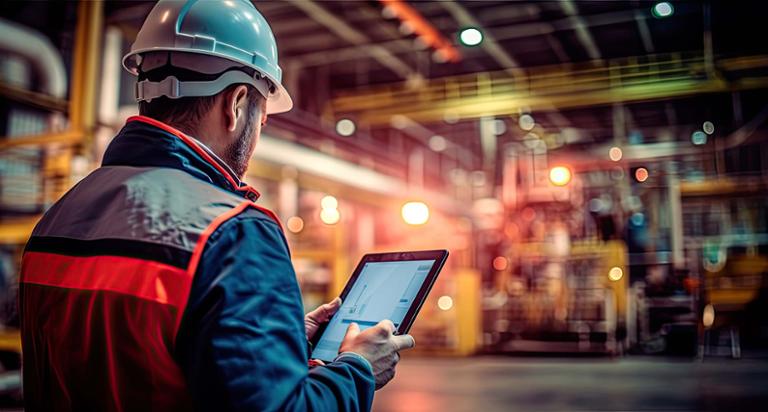
For many IT professionals, the manufacturing industry still evokes assembly lines, repetitive work and legacy technology, but the reality inside many factories is far different.
Today’s facilities increasingly rely on cloud platforms, artificial intelligence, industrial internet of things (IIoT) devices, robotics, digital twins and cybersecurity to keep production moving.
That transformation is creating demand for a different kind of worker—one whose skills were more likely to come from an enterprise IT department than a factory floor.
According to Deloitte and The Manufacturing Institute, U.S. manufacturers will need 3.8 million additional workers between 2024 and 2033, with roughly half—1.9 million jobs—at risk of going unfilled if companies can’t close both a growing skills gap and a shortage of qualified applicants.
Factories Need Tech Talent
Manufacturers are investing heavily in automation, AI and connected systems, fundamentally changing the types of skills they need.
“The factory floor is quietly turning into an IT department,” says Joseph George, general manager of IT solutions group at GoTo.
He explains when manufacturers describe what smart manufacturing requires, the list reads like a job posting from any large enterprise IT organization: cloud infrastructure, data analytics, AI, IIoT networking, and cybersecurity.
George says manufacturing has reached an inflection point, noting traditionally, the industry did not include the breadth of technology seen today.
“While IT skills have been relevant in an industry where technology has increasingly become a differentiator, the pace of digital transformation and technology adoption only continues to accelerate,” he notes.
For IT professionals who may have been looking at manufacturing as a closed world, that door has well and truly opened.
Sarah Lee, research director for manufacturing IT strategies at IDC, sees a similar shift.
“Manufacturing is increasingly becoming a software- and data-driven industry,” she says.
As manufacturers invest in AI, robotics, digital twins, and industrial analytics, they need professionals with expertise in cloud computing, AI, cybersecurity, data engineering, and systems integration.
She says many of these roles don’t require traditional manufacturing experience but rather the ability to apply modern IT skills to operational environments.
The Deloitte noted manufacturers are reporting growing demand for digital skills alongside technical manufacturing expertise and soft skills, with some of the fastest-growing competencies including simulation software, enterprise information management, cloud computing and critical thinking.
Manufacturers also cited machine learning, cybersecurity, data management and analytics as increasingly important as factories become more connected.
Skills that Transfer
For experienced IT professionals, many core technical skills already align with manufacturing’s needs.
“Network architecture, cloud, and data engineering skills can translate directly,” George says. “Manufacturers’ top future investment priorities include data analytics, cloud, and IIoT, work that the enterprise IT industry has been doing for a decade.”
Cybersecurity may offer one of the clearest pathways, although it requires learning how operational technology differs from traditional enterprise environments.
“Operational Technology (OT) and Information Technology (IT) security, while similar, do have differences,” George says. “IT prioritizes confidentiality and addresses vulnerabilities while OT prioritizes uptime and safety. An unplanned system reboot could accidentally shut down a whole production line.”
He recommends building OT-specific expertise through industrial cybersecurity courses and learning industrial protocols to better collaborate with plant engineers.
Dr. Elli Reges, director of learning and development at the Security Industry Association and executive director of the Foundation for Advancing Security Talent, points to networking, cybersecurity and systems integration as especially valuable.
“Many technical skills from enterprise IT translate very effectively into modern manufacturing,” she says. “However, what’s becoming absolutely pivotal in manufacturing today is expertise in digital trust and identity authentication.”
As connected devices proliferate across factory environments, she says securely verifying the identity of every device becomes essential to protecting operations.
Why Manufacturers Want IT Pros
Not long ago, manufacturing companies largely hired from within manufacturing. That’s changing.
“The balance is shifting,” George says. “Manufacturers still need deep process knowledge, and someone who has run a production floor for 20 years brings operational instincts you can’t replicate from a data center.”
At the same time, these companies are sourcing from outside the industry in technology, data, and cybersecurity roles.
He says manufacturers simply can’t develop digital talent quickly enough internally, noting the projects driving smart manufacturing —predictive maintenance systems, OT security operations centers, and cloud-connected production analytics —need strong IT skills and expertise, not traditional manufacturing ones.
“The people who combine both will command the real demand and compensation,” he says.
Reges agrees that employers increasingly value transferable technical skills.
“The labor gap has made it necessary to prioritize individuals with transferable skills in programming, systems design, and data analytics,” she says.
These skills enable the deployment and oversight of advanced technologies which creates new opportunities for IT professionals to play a key role in the transformation of modern manufacturing.
Security a Central Skill
Louis Eichenbaum, Federal CTO at ColorTokens, says the future of manufacturing cybersecurity belongs to professionals who understand both packets and production.
“It's no longer enough to know how to secure an IT network,” he says. “You must understand how a cyber event can affect physical operations, safety, and business continuity.”
He adds the convergence of IT and OT is fundamentally changing manufacturing cybersecurity.
Historically, IT security teams focused on protecting data, while OT engineers focused on keeping operations running safely and reliably. Today, those worlds are colliding.
“Manufacturers are increasingly hiring for hybrid roles that require an understanding of both enterprise cybersecurity and industrial operations,” Eichenbaum says.
He notes some of the fastest growing roles include OT security architects, industrial cybersecurity engineers, cyber physical systems specialists, and Zero Trust architects with experience in manufacturing environments.
“The biggest talent gap is finding professionals who can speak both languages,” Eichenbaum says.
Someone who understands Active Directory and cloud security, but also understands PLCs, HMIs, industrial protocols, and the operational realities of a factory floor.
“That combination of skills remains relatively rare,” he adds.
Making the Career Move
For IT professionals considering a move, experts recommend focusing less on becoming manufacturing experts and more on learning how technology supports industrial operations.
“Get familiar with operational technology and industrial processes being digitally transformed,” George says. “You don’t need to become a controls engineer, but you would benefit greatly from being able to speak the language.”
He points to OT security engineer, industrial data engineer, manufacturing cloud architect and industrial cybersecurity analyst as roles likely to see strong demand, adding AI skills will continue to become critical as manufacturers expand predictive maintenance, AI-powered inspection and production planning.
Lee emphasizes building AI literacy alongside an understanding of manufacturing operations.
“Professionals who can bridge IT and OT and understand how to deploy AI responsibly within operational environments will be well positioned as manufacturers scale AI across the enterprise,” she says.