So, your internet is down…
Back a long time ago, my first experience of using computers was on a teletype connected over phone lines to a computer. When I went to university, I took a portable typewriter with me as the only computers I had access to there were terminals to the university’s mainframes. Laptops did not exist. This was the year before Apple IIs, CBM Pets and TRSA-80s ushered in the era of personal computers. Compuserve was a decade away and unmetered internet access another decade beyond that.
The Canadian philosopher Marshall McLuhan had predicted that we’d all soon become members of a “Global Village” connected electronically and it is getting ever close to happening with just 2 billion people globally who don’t currently use the internet.
The rest of us take the internet with us tucked in our pockets and it’s a quaint notion if not a bit scary to go without connectivity for any length of time. Some employers believe this entitles them to have employees reachable at any o’clock and consequently a few enlightened countries (e.g. France, Portugal, Belgium) have passed “right-to-disconnect” laws forbidding employers contacting employees by text, phone or email outside working hours, except in emergencies.
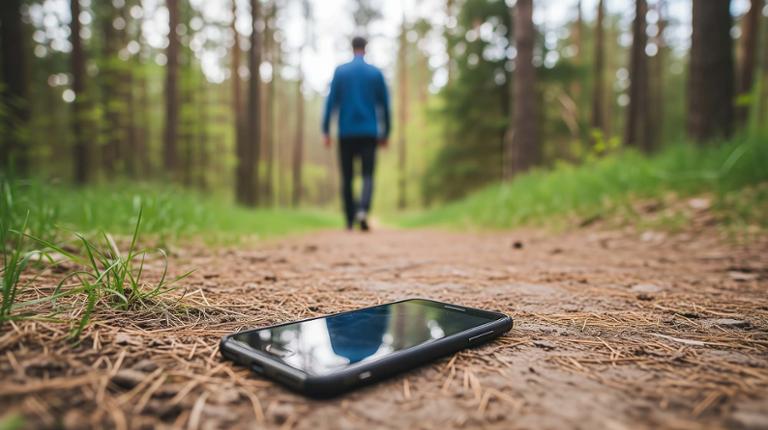
In January 2022, developer Lionel Dricot (aka Ploum) wanted to work completely offline and Offpunk was born; it’s a philosophy opposed to hyperconnectivity. Mankind existed for hundreds of thousands of years without needing to be so greatly connected; Offpunks feel that the internet has become a prison and one way to keep out of it is by living without a smart phone.
Why go Offpunk?
There’s a feel of ludditeism about Offpunk, but its proponents appear to have valid concerns. The digital realm is a fragile place; connectivity can be lost due to power cuts or political activity i.e. as of 2022 there were 22 countries that had shut the internet off for varying periods (source: statista). In times of trouble, mobile connectivity is often one of the first services to go down. If you live in a country where electricity outages or brownouts occur then you’ll have first-hand experience of this. Going cold turkey on being always on is going to be a tough decision!
It’s not just internet connectivity that can break. Many websites are powered by cloud services like AWS, and when those go down a lot of sites are affected. The AWS/Cloudflare outage in 2025 took down at least one streaming service, several online games, cellular services (Verizon and T-Mobile) and both Gmail and Google Maps (source: Lifehacker).
Digital Preppers?
Ploum wanted to spend 2022 completely offline or as much as he could without complete isolation, so he lived by strict rules as to how often he could access the internet typically doing it just once a day for updates.
The Offpunk manifesto suggests you do the following to escape dependence on the digital world.
Start by ditching your smartphone and switching to a dumb phone. Make sure you can communicate independent of the internet. Use Bitchat (Bluetooth), the Gemini protocol for accessing remote documents, Tor and encrypted email. It’s safer to use Linux rather than Windows because Windows is very chatty unless you use it on an air-gapped PC.
If you want to take photos, use a digital camera instead. Next, you’ll have to swap your online world for a more analog one; use cassettes or vinyl for music, cash for buying things and in the extreme, typewriters for writing. That way, when a digital blackout comes along, you are prepared. If you lose access to streaming services like Spotify, your old MP3 collection will do at a pinch.
This has its downsides. The only way to make backups of typewritten writing is by typing a backup copy or spending a fortune on printer ink or photocopies. However, Ploum recommends you stockpile hard drives, USBs and self-managed cloud services so you can make your own backups of digital stuff.
Say bye-bye to social media
Losing all internet access is an extreme case, but Ploum argues for less connectivity, perhaps switching to sneakernet or a mesh network as alternatives. If you can work in a reduced connectivity environment when you don’t need to you are prepared if full connectivity loss happens.
You are going to lose a lot of the convenience of searching online, doing translations, applying for jobs, booking meals and concerts. Worst of all, is loss of social media. Just think of the time you’ll save!
Conclusions
I think we are approaching a point of no return beyond which it will become impossible to go Offpunk unless you go and live in a cave and cut off all contact. Some governments like the UK are adopting digital ID schemes that require smartphones and apps to interact for things like driving licences or paying taxes. Opting out will prove really challenging and may even become illegal!
This forced digitization has already happened with job applications. The emphasis with Offpunk is more about an unconnected lifestyle rather than going fully analog unless you wish to do so. Don’t forget to read the Offpunk manifesto.